
Pakistan’s Used car imports jump 4,600% from May to September
Pakistan’s used-vehicle imports jumped 4,642% from May to September 2026, rising from 48 to 2,276 units as regulatory changes fuelled a sharp rebound.
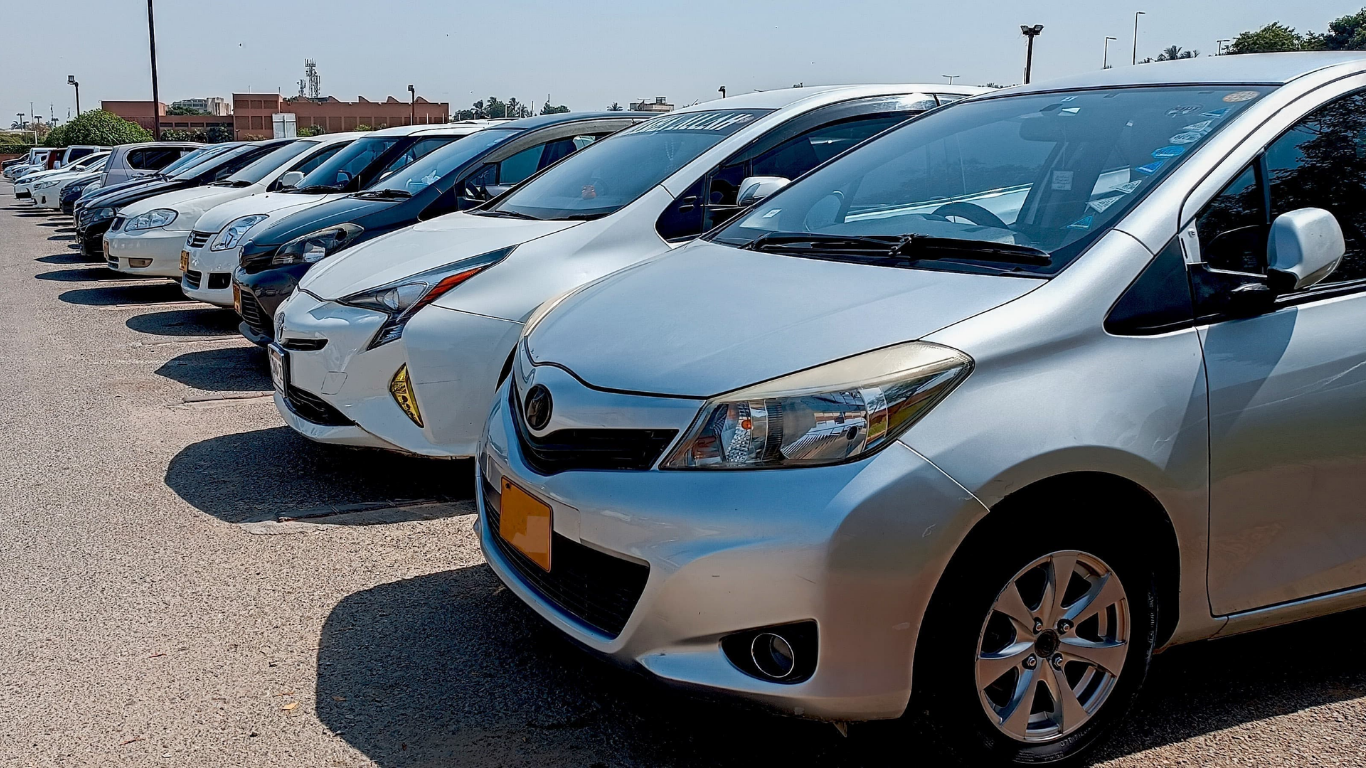
Pakistan’s used cars imports jumped 4,642% between May and September 2026, rising from just 48 vehicles in May to 2,276 in September, according to data from the Ministry of Commerce.
The sharp increase comes after the government changed rules governing used-vehicle imports, with most of the recent vehicles entering Pakistan through the Gift Scheme.
Used-vehicle imports began rising sharply in June, reaching 843 units, of which 806 were imported under the Gift Scheme. The number climbed to 1,938 in July, including 1,876 under the scheme, before easing to 1,445 in August.
Imports then accelerated again in September, reaching 2,276 vehicles, with 2,238 coming through the Gift Scheme.
The increase from 48 vehicles in May to 2,276 in September represents a 4,641.7% rise, making 4,600% a rounded figure.
Why imports are rising
The rebound follows changes to Pakistan’s vehicle-import framework and comes after the government abolished the Personal Baggage Scheme earlier this year while imposing tighter requirements on other used-vehicle import channels.
The latest increase has also coincided with changes introduced by the Engineering Development Board on September 30. The revised framework removed the minimum capital requirement for companies importing used vehicles and shifted pre- and post-shipment inspection responsibilities from the EDB to the Pakistan Standards and Quality Control Authority and its registered inspection agencies.
The Pakistan Automotive Manufacturers Association has raised concerns over the relaxed framework, arguing that imported used vehicles have a built-in cost advantage over locally produced cars.
PAMA said the September notification removed several safeguards that had been introduced under the earlier framework and warned that a return to FY26 used-vehicle import volumes could result in losses of more than PKR 50 billion for the domestic automotive industry and its vendor network.
Local car market is also recovering
The rise in used imports comes as Pakistan’s locally assembled passenger-car market has recovered from the sharp slowdown seen in recent years.
PAMA data showed passenger-car sales reached 30,933 units during July-August 2026, compared with 17,192 units in the same period last year, representing a 79.9% increase.
Passenger-car production also rose to 30,574 units during the first two months of FY27, up 36.2% from 22,446 units a year earlier.
However, monthly sales lost some momentum in August.
Passenger-car sales stood at 13,717 units in August, down 20.3% from 17,216 units in July, although they remained 36.4% higher year-on-year than the 10,057 units recorded in August 2025.
Suzuki Alto remained the biggest-selling passenger car in August, with 5,339 units, while Toyota’s Corolla, Yaris and Corolla Cross collectively sold 3,079 units. Honda’s City and Civic recorded combined sales of 2,553 units.
The broader local auto market had already shown a strong recovery in FY26. PAMA data showed passenger-car sales rose 39% to 155,631 units during FY26 from 112,203 units a year earlier.
Competition set to intensify
The simultaneous recovery in local car sales and surge in used-vehicle imports could intensify competition in Pakistan’s automotive market.
For consumers, a larger supply of imported used vehicles could mean more choice and greater price competition. Local manufacturers and parts suppliers, however, argue that imported vehicles could divert demand away from locally assembled cars and reduce activity across the domestic vendor network.
The debate comes as the government works on the next auto policy, with manufacturers pushing for a regulatory framework that encourages local production and investment while importers argue that greater competition will give consumers more options.
With used-vehicle imports already rising sharply and new-energy and other imported models also entering the market, Pakistan’s automotive sector is heading into a period of heightened competition between locally assembled and imported vehicles.
Written by
Abdul Habib Khan
Editor
Habib Khan is a Pakistani journalist, writer and editor covering business, the economy, markets and real estate. He has worked with leading Pakistani media organizations. You may reach him at habib.khan@fyipk.com


