Gandhara Independent Film Festival 2026 asks who gets to watch Pakistan’s indie cinema
The Gandhara Independent Film Festival 2026 showcased Pakistani indie filmmakers tackling stories rarely given space in mainstream cinema, while raising questions about local access to independent films.
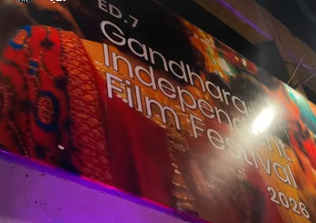
The Gandhara Independent Film Festival 2026 ended its seventh edition in Karachi on October 4 with award recognitions for independent filmmakers from Pakistan and around the world, as the festival’s final day at the National Academy of Performing Arts (NAPA) highlighted a growing question for local cinema: how can Pakistani audiences gain easier access to the independent films already earning attention at festivals?
The festival’s final day featured special presentations of six international and four Pakistani short films. The Pakistani lineup included How to Kill Your Hunger? by Mehroz Amin, A Chef’s Wish - The After by Umar Riaz, Permanent Guest by Sana Zahra Jafri and Khazana by Basir Ahmed.
International selections included Syrian documentary Who Love the Sun by Arshia Shakiba, Buffalo by Cristian Fidel from Spain, Ningu Borda (Nobody Barks) by Julia Coldwell Serra from Spain, Legacy of the Sun and Moon by Kiyun Gabriel Sung from South Korea, French-Canadian animation What We Leave Behind by Jean-Sebastien Hamel and Alexandra Myotte, and Paradise Height by Karl Kai and Robert Mentov from Hong Kong and Canada.
The films presented a different view of the stories that can emerge outside mainstream commercial structures. Across Pakistan’s independent film scene, filmmakers are examining sexual abuse, poverty, grief, class, disability, family and everyday life, alongside stories involving transgender communities, Afghan refugees, Hazara musicians, working-class communities, rural injustice and disappearing crafts.
Short films have also become a space for stories that rarely receive sustained screen time in mainstream Pakistani cinema, including narratives around a transwoman leading religious lament in Lahore and the Hazara community’s relationship with the dambora. Their presence at GIFF points to a broader range of Pakistani experiences being documented through independent filmmaking.
The festival’s award results further reflected the range of local work. In the Pakistani fiction category, Khazana by Basir Ahmed won Best Director, Best Sound Design and Best Production Design. Permanent Guest by Sana Zahra Jafri won Best Film, Best Costume Design and Best Editing. Attock by Awais Gohar won Best Cinematography, while How to Kill Your Hunger? by Mehroz Amin won Best Screenplay.
In the Pakistani documentary category, W.R.A.P. - We Really Are Pakistan! by Saba Karim Khan won Best Film, The After: A Chef’s Wish by Umar Riaz won Best Director, and Body by Husain Qaizar and Saad Zuberi won Best Cinematography.
Other Pakistani awards went to Desi Fiction by Rayyan Shahid for Best Emerging Talent, Raat Jaagay by Mahnoor Nawab for Best Showcase and Red Samosay by Saif Malick for Best Cinematic. Blender by Syed Nabil Hasan Rizvi, A Shadow Left Behind by Aun ul Haider, To Bury a Bird by Zargham Ali Khokhar, Tarair by Mohsin Asghar and Chaand Pay Charkha Kaat’ti Bhudiya by Yaseen Khatri received GIFF Appreciation Awards. Adnan ShahTipu won Best Actor (Male) for How to Kill Your Hunger?, while Rasti Farooq won Best Actor (Female) for her role as Fatin in Permanent Guest.
The international categories recognized The Father by Pavel Ivanov with Best Film and Best Director, Salmon by Oscar Faarup with Best Screenplay and The Key by Paul Sportiello with Best Editing in the foreign feature category. Among foreign shorts, Brute by Jeremy Comte won Best Film and Best Director; Legacy of the Sun and Moon by Kiyun Gabriel Sung won Best Screenplay; Petticoats by Gaelle Graton won Best Production Design; Yo Yo by Mohammadreza Mayghani won Best Costume Design; Jazz Infernal by Will Niava won Best Sound Design; and My Plastic Mother by Amar Haikal won Best Editing.
GIFF received around 6,000 films from around the world, with 60 selected for its digital edition: seven foreign-language features, 25 foreign-language shorts and 28 Pakistani shorts.
The numbers underline the interest in independent filmmaking, while access remains a challenge. Limited cinema runs, fragmented streaming availability and the absence of a consistent platform can leave local audiences asking where they can watch films that have already travelled internationally.
ARY Plus, as GIFF 2026’s official Streaming Partner, has stepped into that gap by providing a digital home for the festival’s films. Festivals can create visibility, and international recognition can draw attention, but Pakistani independent filmmakers also need a sustained local audience.
GIFF is a Cirque Films initiative. The festival’s final awards may recognize the filmmakers. The larger question is whether audiences in Pakistan will get enough opportunities to see their work. Independent cinema does not need an international stamp before it deserves a local audience.


