
Makkah Pact officials to meet Iran as regional tensions escalate
Makkah Pact officials from Pakistan, Saudi Arabia and Türkiye are expected to meet Iranian representatives in Tehran as Houthi attacks on Saudi Arabia intensify and US-Iran negotiations remain stalled.
Officials from Pakistan, Saudi Arabia and Türkiye are scheduled to meet Iranian representatives in Tehran on Monday to discuss regional security and coordination, as tensions across the Middle East continue to rise.
According to Reuters, the meeting will bring together senior officials from the three countries that signed the Makkah Joint Defence Agreement in August, marking the first high-level engagement between Iran and all three pact members since attacks by Yemen's Iran-aligned Houthi group on Saudi Arabia intensified.
Pakistan will be represented by Chief of Army Staff Field Marshal Asim Munir, while Saudi Arabia will send Defence Minister Prince Khalid bin Salman. Türkiye's intelligence chief, Ibrahim Kalin, is also expected to participate.
Iran's Deputy Secretary of the Supreme National Security Council, Ali Bagheri Kani, confirmed that the officials would visit Tehran for consultations with the country's top security body.
The Saudi government media office, Pakistan's military media wing and Türkiye's Foreign Ministry did not immediately respond to Reuters' requests for comment.
Pakistan's diplomatic role in focus
The meeting comes as Pakistan continues to serve as an intermediary between Washington and Tehran, seeking to facilitate dialogue between the two sides amid a wider regional conflict.
Munir visited Tehran last week, where he met Iranian President Masoud Pezeshkian and other senior officials. Iranian officials reportedly told him during the visit that Tehran would not engage in talks with Washington until its demands were met.
Earlier mediation efforts involving Pakistan helped produce an interim peace agreement in June. However, the arrangement subsequently collapsed as fighting between Iran and the United States resumed.
Iran has continued to signal that diplomatic channels remain open. Foreign Ministry spokesperson Esmaeil Baghaei said on Sunday that messages were still being exchanged with Washington through intermediaries, while accusing the United States of insisting on unilateral demands.
The latest meeting could provide an opportunity for regional powers to discuss security concerns and coordination, although it remains unclear whether the consultations will lead to renewed direct negotiations between Washington and Tehran.
Trump rules out US strikes before midterm elections
US President Donald Trump said on October 8 that Washington would not resume military strikes against Iran before the November 3 US midterm elections.
Trump said his administration was engaged in what he described as productive discussions with Tehran, while leaving open the possibility of further military action after the election period.
The statement did not amount to a permanent commitment to end military operations, and the broader US-Iran standoff remains unresolved.
Negotiations have faced significant obstacles, including disagreements over the Strait of Hormuz, maritime security and Washington's naval blockade of Iranian ports.
The Strait of Hormuz is a critical international shipping route for oil and other energy supplies. Disruptions to traffic through the waterway have wider implications for global energy markets, shipping costs and regional economic stability.
Iran has previously proposed reopening the strait under certain conditions, including changes to the US naval blockade. Washington and Tehran have yet to resolve their differences over the terms of a broader agreement.
Saudi security concerns add urgency to regional talks
The Tehran meeting also comes as Saudi Arabia faces renewed security threats from Yemen's Houthi group, which is aligned with Iran.
Saudi forces intercepted another wave of missiles and drones on Sunday, October 25, as fighting involving the Houthis continued.
The attacks have increased pressure on regional governments to coordinate their security responses and address the risk of the conflict spreading further.
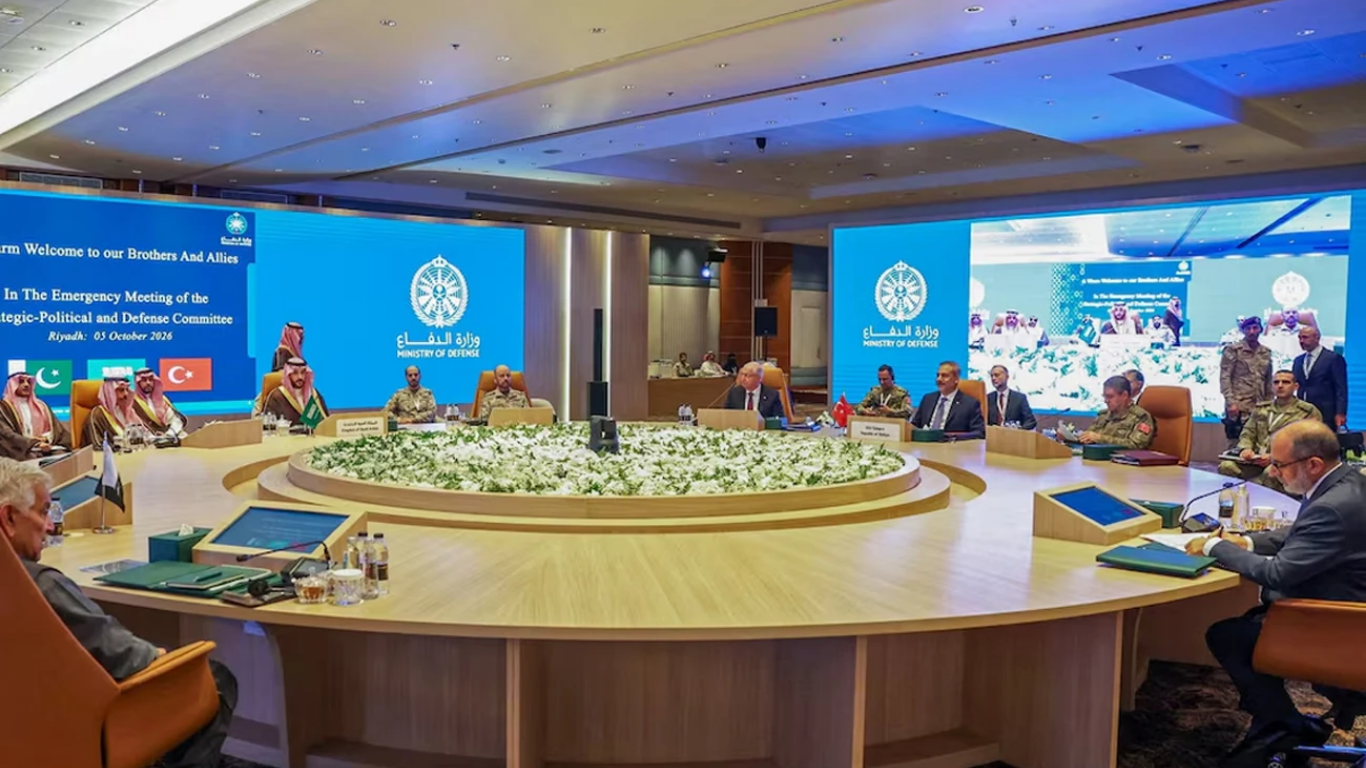
Earlier this month, ministers from Pakistan, Saudi Arabia and Türkiye held an emergency meeting in Riyadh and agreed to ensure the rapid deployment of military forces and capabilities in Saudi Arabia.
The developments have placed additional emphasis on the relationship between the three countries' defence commitments and their diplomatic engagement with Iran.
What the Makkah Joint Defence Agreement means
Pakistan, Saudi Arabia and Türkiye signed the Makkah Joint Defence Agreement in August, establishing a mutual defence arrangement under which an armed attack on one member is considered an attack on all.
The agreement commits the signatories to use necessary means to address threats to one another's territorial integrity, sovereignty and internationally recognised borders.
Pakistan approved the agreement last week, while the ratification process in Türkiye remains underway.
The pact has emerged as a significant element of regional security coordination, particularly as Saudi Arabia faces attacks linked to the wider conflict involving Iran and the United States.
The three countries have described their defence cooperation as a means of strengthening mutual security. Their planned engagement with Tehran also highlights the importance of maintaining diplomatic channels alongside defence commitments.
Whether Monday's discussions can help reduce regional tensions will depend on the positions taken by the participating governments and the extent to which they can address the security concerns driving the wider conflict.


