
Pakistan textile exporters warn of sharp export decline in October-December
Pakistan’s textile exporters have warned of a sharp decline in October-December exports, seeking 6% to 8% tax relief, clearance of outstanding refunds and implementation of the announced 4.5% export financing rate.
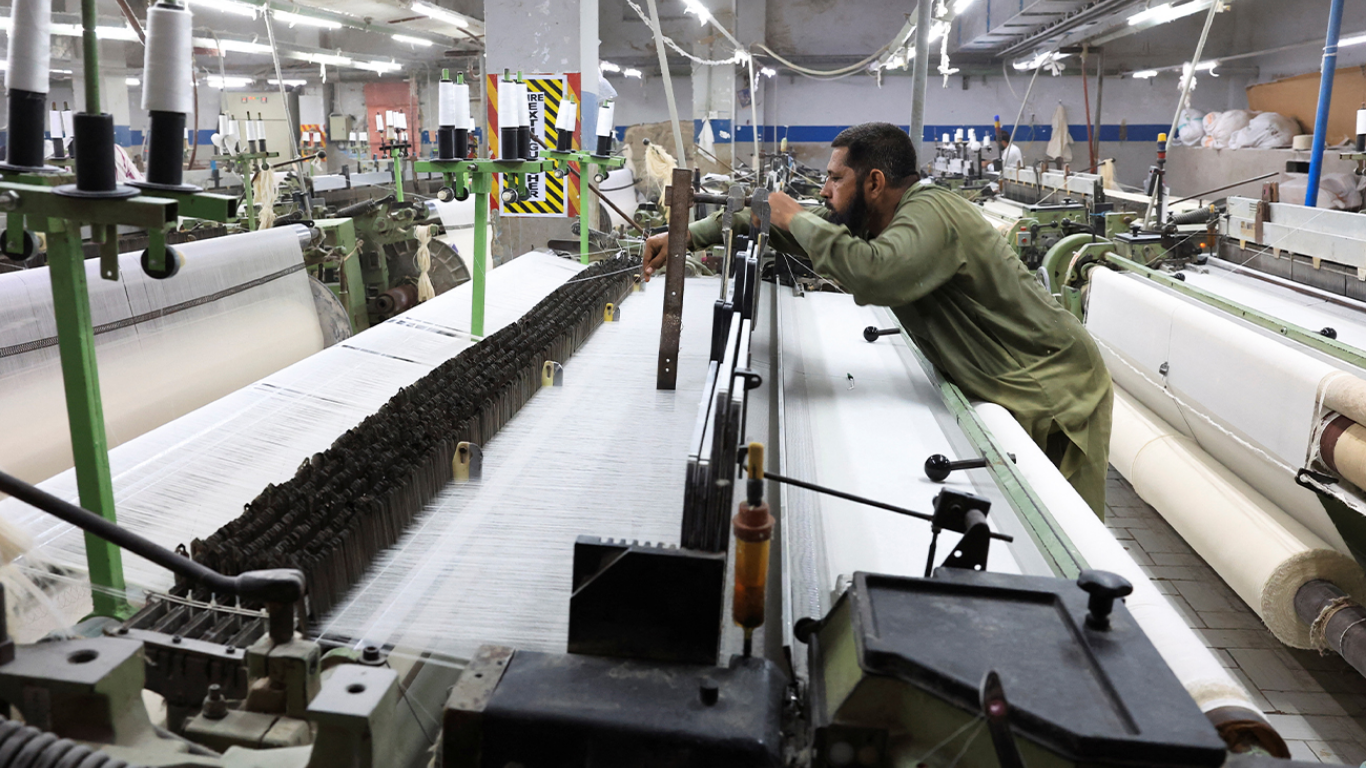
Pakistan’s textile exporters have warned of a sharp decline in goods exports during October-December, citing weaker demand in Western markets, surging shipping costs and rising production expenses.
The Pakistan Textile Exporters Association (PTEA) said the industry was facing mounting pressure that could erode Pakistan’s share in international markets and make it difficult for local businesses to recover lost ground.
PTEA Patron-in-Chief Khurram Mukhtar said inflation in Western economies had weakened international buyers’ demand, while sea freight charges had risen 1.5 to 2.5 times, squeezing exporters’ already thin profit margins.
He described the decline in export trade volumes as unprecedented, warning that financially stronger businesses were more likely to withstand the pressure while others faced growing difficulties.
The slowdown is also affecting the wider textile supply chain, including ginning, spinning, weaving, processing and knitting. Weak domestic demand amid high inflation has added to the strain, leaving several segments of the industry under financial pressure.
Exporters seek tax relief and pending refunds
The association has called on the government to introduce temporary support through a 6% to 8% Duty Drawback of Local Taxes and Levies (DLTL) scheme to help exporters remain competitive in international markets.
It has also demanded the immediate release of outstanding refunds to ease liquidity constraints across the textile supply chain.
Mukhtar urged the government to remove cross-subsidies embedded in industrial energy tariffs, arguing that the existing cost structure was further weakening the competitiveness of Pakistani products.
Dispute over export financing rate
The association also raised concerns over the implementation of the Export Finance Scheme (EFS), saying the government’s announced financing rate of 4.5% under the FY27 Finance Bill had yet to take effect.
According to Mukhtar, banks were charging exporters rates ranging from at least 5.5% to as high as 8.5%, despite the announced rate.
He further claimed that around PKR 200 billion in financing had been extended to yarn exporters, even though yarn was on the scheme’s negative list. He also questioned financing for sugar exporters, citing the sector’s highly regulated nature.
At the same time, he alleged that eligible textile exporters with export performance substantially above the State Bank of Pakistan’s mandatory requirement were being denied financing allocations.
The association’s demands come as the industry seeks lower production costs, easier access to financing and faster refunds to protect export orders and retain its position in global markets.


